Vampire Soulmate Bond
The Secret VampireThe Vampire Soulmate Bond is the story’s supernatural designation for the relationship between Callum and Celeste. Its significance develops from a possibility Carmilla considers after learning that Celeste is special into an explicit revelation to Celeste herself. The bond gives their relationship the shape of a destined union, but the narrative also makes its survival depend on trust, difficult choices, and Celeste’s own actions.
Nature and First Recognition
The bond is introduced through uncertainty rather than a formal explanation. After receiving a document about Celeste, Carmilla learns that the young woman is special and cannot be harmed. The information prompts Carmilla to wonder whether Celeste might also be her son’s soulmate. At this stage, the bond is a possibility, not a certainty: the document establishes Celeste’s unusual status, while Carmilla draws a tentative connection between that status and Callum.
That suspicion carries particular weight because Callum belongs to the Vampire royal family, while Celeste enters the story as a human newcomer to Cape Town. Callum’s own place in the royal family began in extraordinary circumstances: after his death, Vlad and Carmilla made him their son and named him their legacy. The soulmate idea therefore joins an intimate human relationship to a story already concerned with boundaries between humans and Vampires. The evidence does not set out a rulebook for how such a bond works, or say that it automatically determines either person’s choices.
Signs of Attachment and Conflict
Before the bond is directly named to Celeste, the story shows Callum’s attention to her distress. After Celeste visits Brianna’s grave and speaks there about her sister and Callum, he watches from a nearby tree and recognizes that Celeste is in pain. He addresses Brianna’s grave with a promise to protect her sister. The scene presents his attachment as attentive and protective, rooted in Celeste’s grief; it does not explain that he senses her feelings through a defined supernatural mechanism.
The prospect of a soulmate does not prevent misunderstanding or jealousy. Susie sees Callum and Celeste’s closeness as a threat, and later insists that she and Callum belong together. Damien counters this claim by telling her that Callum and Celeste are soulmates. Celeste, however, answers Susie without treating their relationship as a contest: she says that she loves her sister and does not want to fight her, while making clear that Callum loves someone else. The bond thus becomes a truth that others can invoke, but Celeste’s response is grounded in both affection and a refusal to let Susie’s possessiveness dictate her choices.
Revelation and Celeste’s Agency
The clearest explanation arrives when Celeste, recovering in the hospital after her captivity, dreams of Carmilla. In the dream, Celeste sees Samara killing her mother and panics. Carmilla comforts her, insists that she is not ordinary, and tells her that she has a gift and is her son’s soulmate. She also urges Celeste to be brave because Callum needs her, then shows her a memory from her childhood before disappearing. The scene connects three revelations—Celeste’s special nature, her gift, and her bond with Callum—without explaining the gift’s full limits. Carmilla’s message frames the bond not simply as a romantic promise but as a reason Celeste has a role in the danger facing Callum.
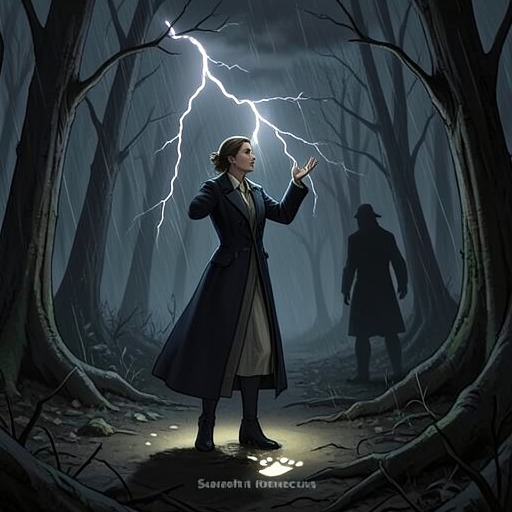
That role becomes concrete when Samara’s scheme is exposed. Celeste uses her power to create a portal showing the past, enabling Samara’s crimes to be revealed, including the murders of Carmilla and Celeste’s mother. When Samara attacks, Celeste uses the energy she has left to trap her in a magical hourglass. The narrative does not state that the soulmate bond itself grants Celeste this power. Instead, it places her supernatural gift and her relationship to Callum alongside one another: the bond draws her into the crisis, while her own ability helps end it.
Recognition, Commitment, and Outcome
After Samara is exposed and imprisoned, Celeste collapses from exhaustion and Callum comes to her. A few days later, as she recovers, he takes her to the college sports field and proposes marriage. His proposal recalls how losing her left him feeling trapped, alone, and lifeless, and he asks her to share his life. Celeste accepts, and the couple’s engagement turns the soulmate revelation into a mutual commitment made through an explicit choice rather than a prediction alone.
Three years later, Callum and Celeste are happily married and have a son, Silas. Callum has succeeded Vlad as Vampire King, so their relationship endures alongside a change in royal leadership. The ending completes the bond’s movement from Carmilla’s private suspicion, through a revelation made to Celeste, to a shared family life. The story gives the soulmate idea emotional and plot importance, while leaving its supernatural mechanics open: what it demonstrates most clearly is not a system of rules, but a relationship tested by rivalry, loss, separation, and danger, and ultimately affirmed by both partners.